
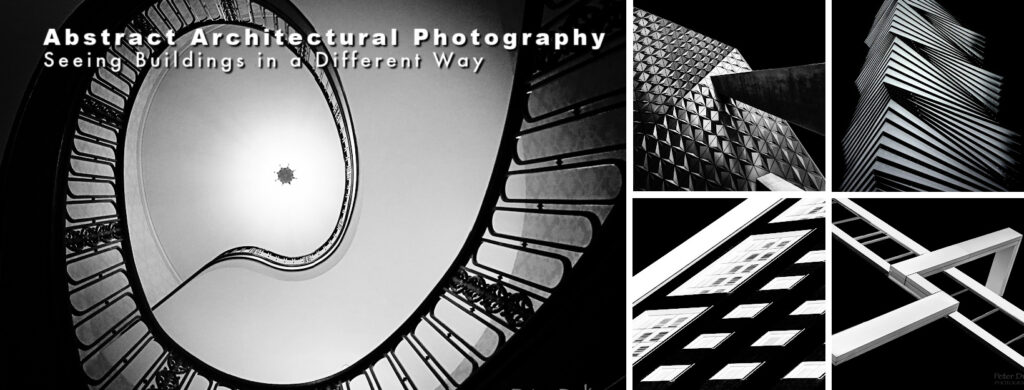
Architectural photography is often associated with capturing the grandeur of buildings, impressive skylines, and intricate historical structures. But what happens when we look beyond the building itself and begin to see its shapes, patterns, lines, and textures? This is where abstract architectural photography comes into play. Over the past several years, I’ve explored this subject as part of a personal project, developing a series of photographs designed to stand alone as striking pieces of wall art. In this article, I’d like to share some of my thoughts, experiences, and creative insights into this fascinating genre of photography.
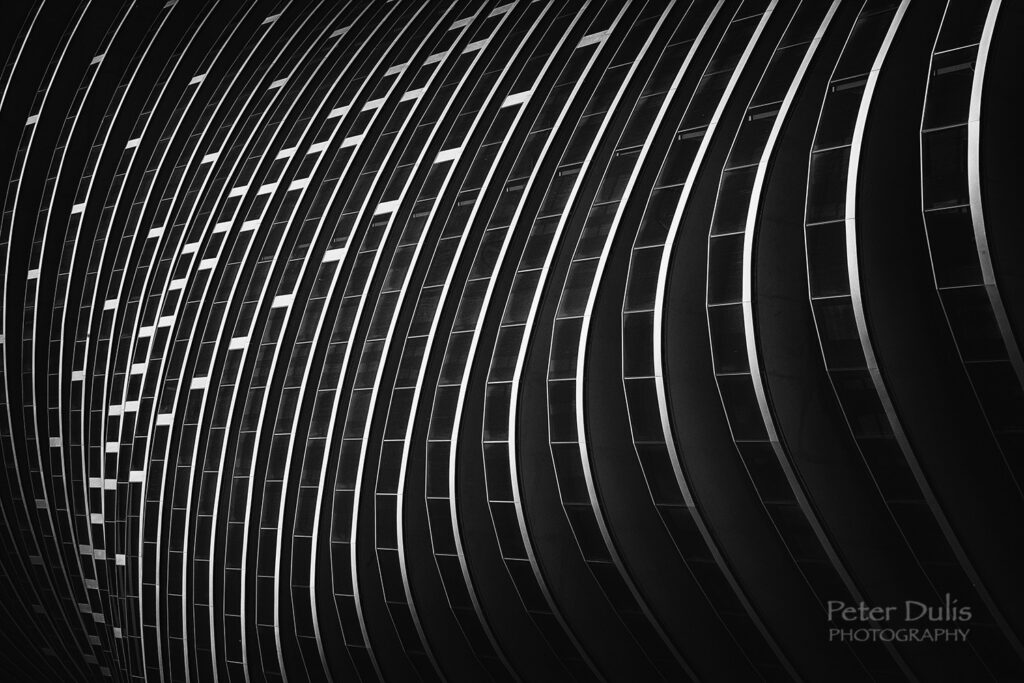
105mm; 1/100 sec.; f/16; ISO 160; Aperture priority
Architectural abstract photography transforms familiar building elements—such as façades, beams, stairwells, and geometric structures—into artistic compositions of lines, shapes, light, and perspective. Rather than documenting a building as we see it, the goal is to explore its underlying geometry, proportions, and spatial relationships, revealing a more creative and expressive interpretation of the built environment. Here’s an example of The Absolute Towers in Mississauga, with the image turned sideways.
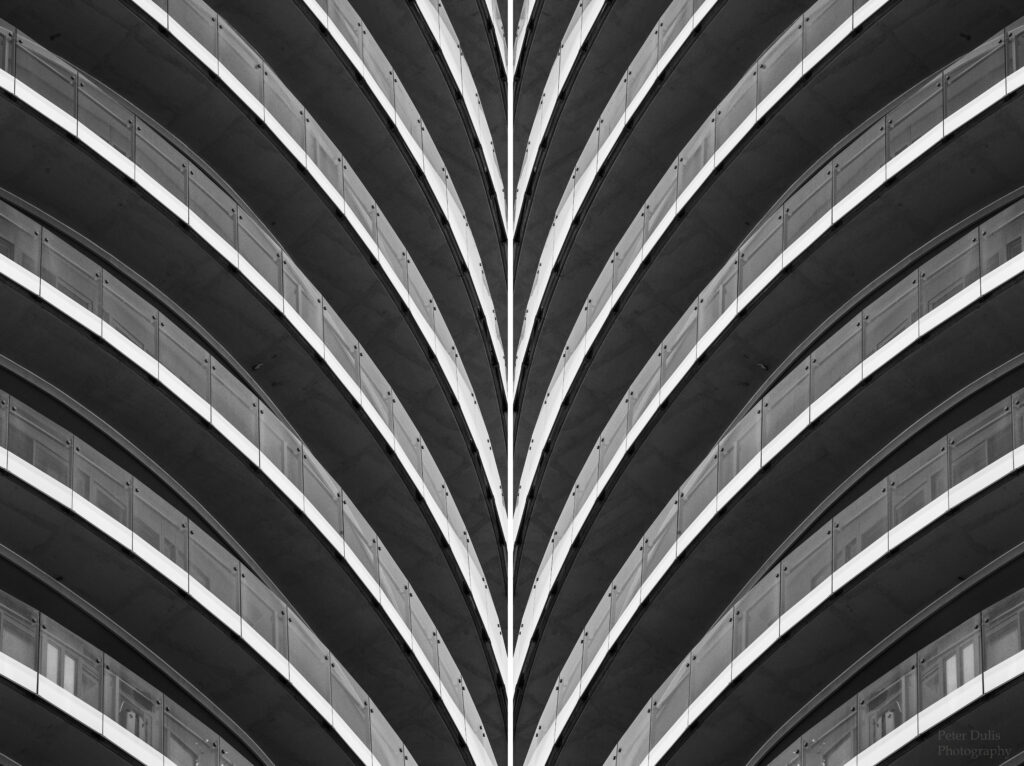
200mm; 1/200 sec.; f/13; ISO 640; Aperture priority
A curved wall, a series of identical windows, or the intersection of two structural elements can become the subject of an entirely new composition. By moving closer, changing our viewpoint, or looking upward, we can discover photographs that might otherwise go unnoticed. The challenge is to train our eyes to recognize visual relationships rather than simply identifying the objects in front of us. Here’s another one of the Absolute Towers, one of my favorite buildings to photograph in Mississauga.
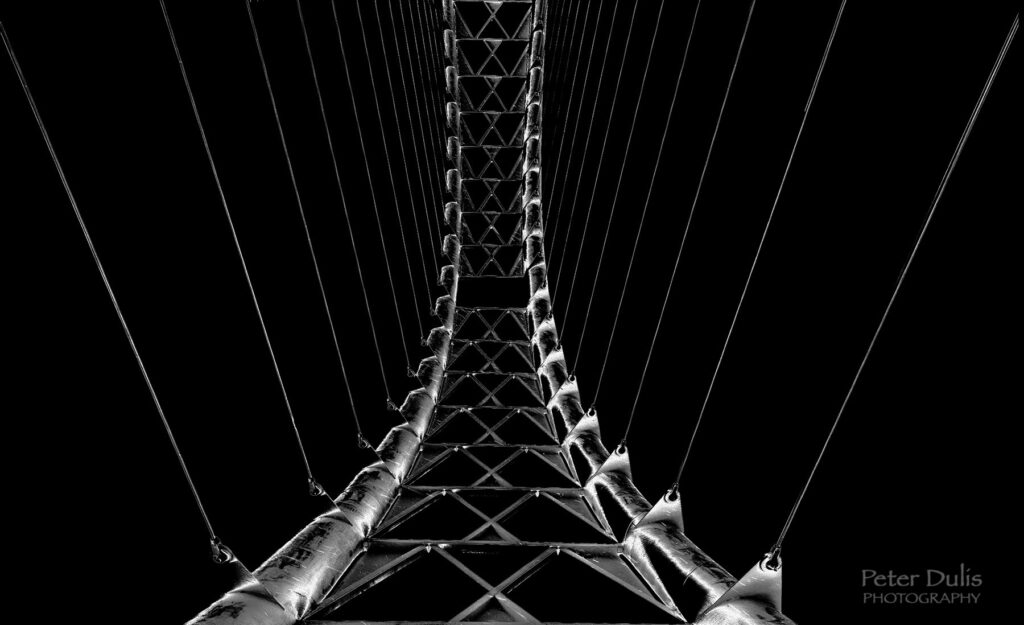
19mm; 1/50 sec.; f/14; ISO 100; Aperture priority
Light plays an equally important role. The changing direction and quality of light can dramatically alter the appearance of architectural surfaces. Early morning and late afternoon sunlight may reveal textures, emphasize curves, and create long shadows that add depth to an otherwise flat surface. On overcast days, softer light can help bring out subtle colours and details without harsh contrasts. Here’s the Humber Bay Arch in Toronto. This image was inverted in Photoshop – white is black and black is white. Sometimes I need to darken the surrounding areas as well.
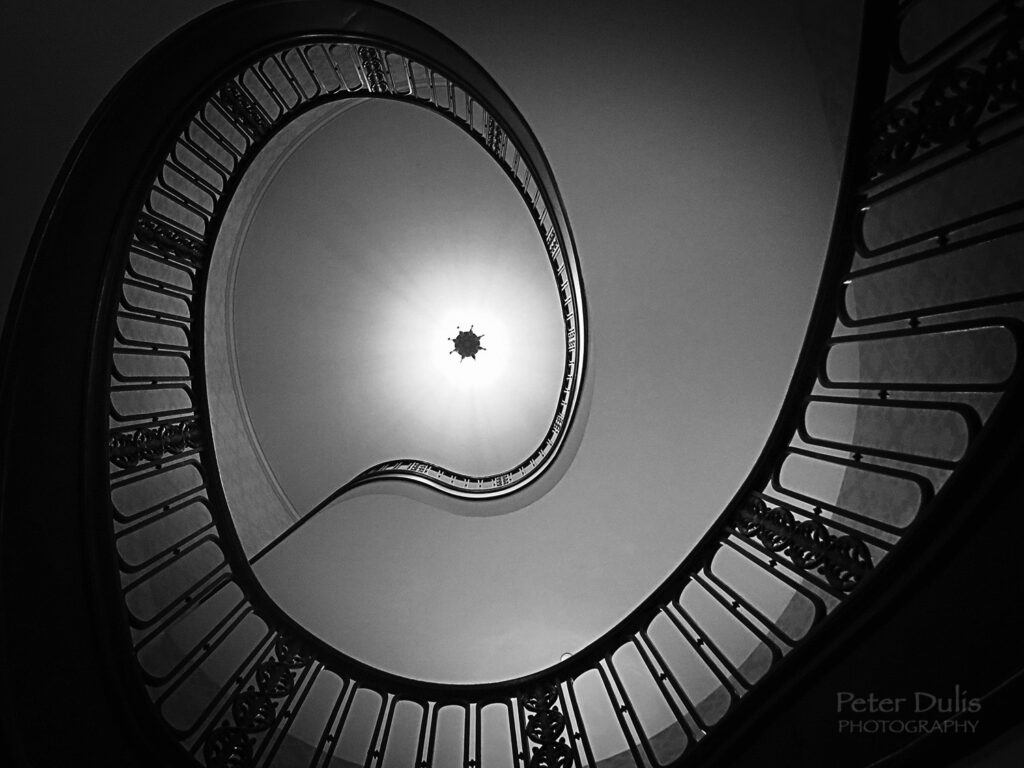
5.2mm Lens; 1/40 sec.; f2.0; ISO 800;
You don’t necessarily need specialized equipment to explore architectural abstract photography. A wide-angle lens can help emphasize dramatic perspectives, while a telephoto lens is excellent for isolating distant details and compressing repeating patterns. A standard zoom or even a smartphone can be equally effective when you learn to recognize interesting compositions. This photo was taken with a Canon S110 point & shoot camera, placed on the floor of the Palmer Building in Chicago to shoot the staircase upwards on a timer.
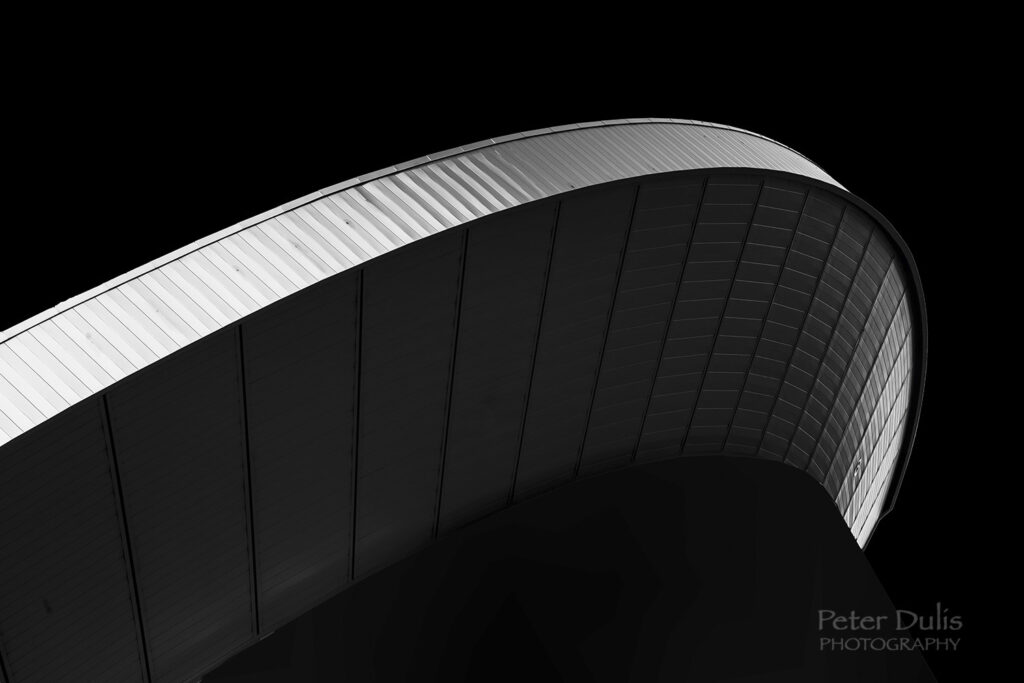
84mm; 1/80 sec.; f/10; ISO 400; Aperture priority
Ultimately, architectural abstract photography is less about the buildings themselves and more about how we interpret the world around us. It encourages us to slow down, look carefully, and discover beauty in details that might otherwise be overlooked. The real magic of architectural abstract photography is turning something familiar into something unexpected. This one was captured at Square One Mall in Mississauga, entrance 3. Architectural Abstract photos abound everywhere, if you have the eye to see them.
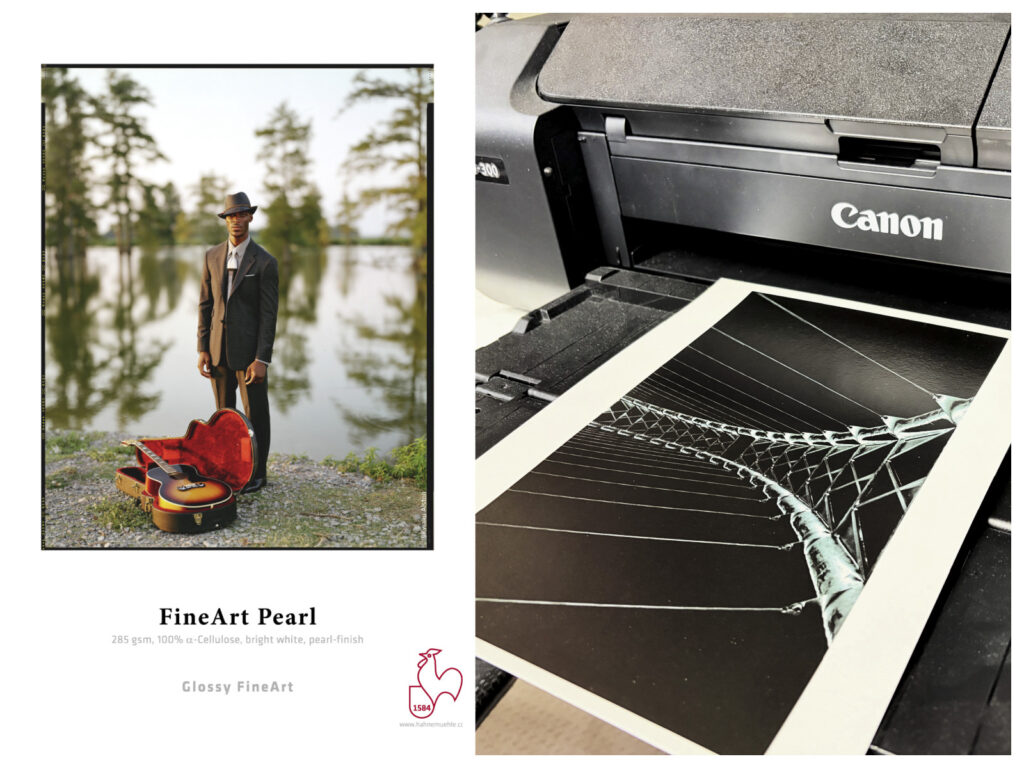
The Finishing Touch
For this Abstract Architectural collection, I decided to experiment with the Hahnemühle FineArt Pearl paper, from the Glossy FineArt collection. I thought this paper would really enhance the black & White photography. The paper itself is made from 100% cotton with a bright white pearl/satin finish. The bright white of FineArt Pearl enables impressive contrasts and pictorial depth in black and white or colour photography. There’s a Glossy FineArt sample pack that allows you to try out 8 different types of glossy medias. (2 sheets of each) Why not give it a try!
Ps – Be sure to visit us at the Amplis booth at the Toronto ProFusion Expo 2026, November 11–12!
ProFusion is a unique opportunity to expand your knowledge, discover emerging technologies, and gain insight into the latest industry trends.
We’ll be presenting both days on the Main Stage with: The Journey of an Image: From Capture to Print
Join us as we explore the creative and technical journey of a photograph—from the moment of capture to the finished fine-art print. Hope to see you there!
Peter Dulis