
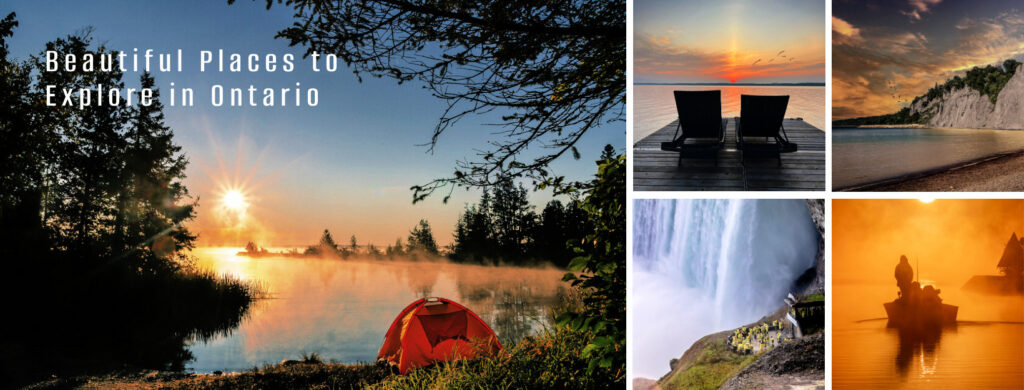
With spring now in full force, there is a renewed sense of life and movement across Ontario—making it the perfect time to turn attention closer to home. Rather than looking far afield, I felt drawn to explore my own backyard, to rediscover the beauty that often goes unnoticed in familiar places.
Ontario offers an extraordinary range of landscapes—from rugged shorelines and quiet forests to charming small towns and vibrant natural wonders. Here are some of the most beautiful places that I’ve explored, and want to share with you in this month’s blog.
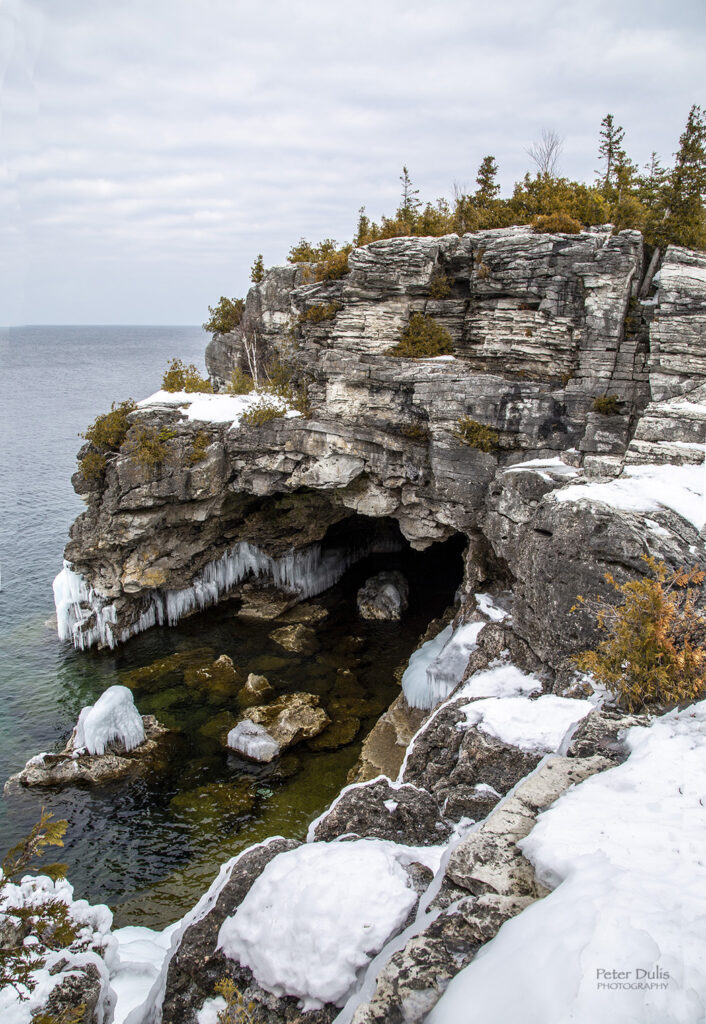
24-105mm Lens; 1/50 sec.; f/11; ISO 100; AV mode
Bruce Peninsula National Park
Bruce Peninsula National Park is famous for its turquoise waters and dramatic cliffs along the Georgian Bay. The Grotto is the park’s most famous attraction—and for good reason. It’s a natural sea cave carved into the limestone cliffs, opening out to incredibly clear, blue water that almost looks tropical on a sunny day. Here’s a photo I captured last winter but you can see the beauty of this place any time of year.
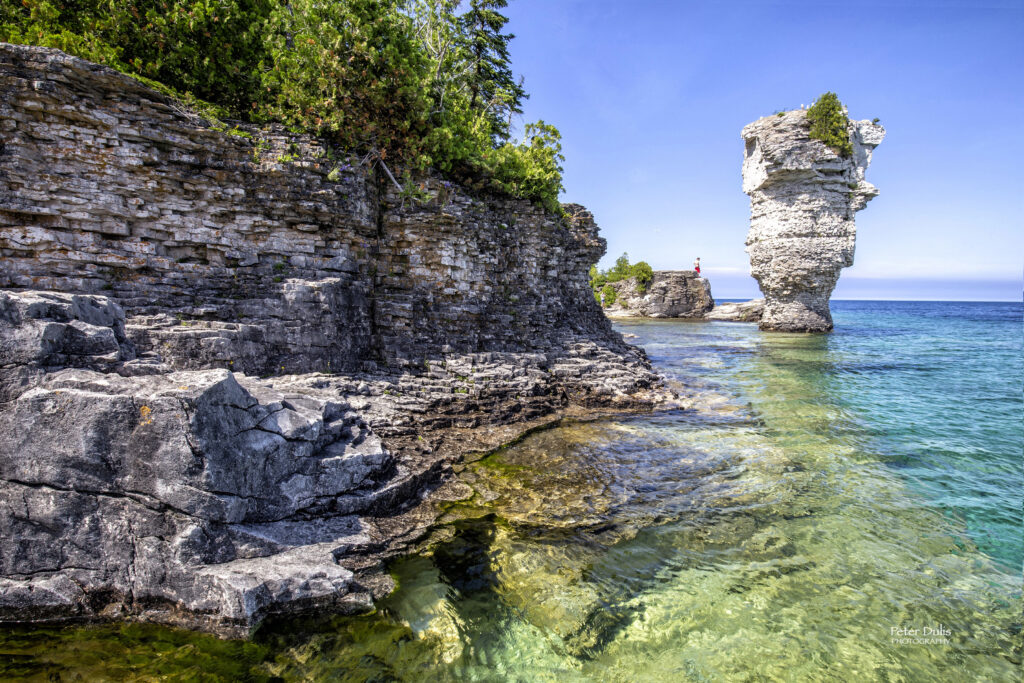
16-35mm Lens; AV mode; f/11, ISO 100; 1/80 sec.
Tobermory & Flowerpot Island
Flowerpot Island is renowned for its iconic natural sea stacks—aptly named “flowerpots”—along with its caves, rare plant life, and historic light station. It’s a spectacular destination for photography in any season, offering ever-changing light and textures throughout the year.
Accessible only by boat, we reached the island on a scenic cruise, with operators like the Blue Heron Company and Flowerpot Express providing drop-off and pickup service. We brought along our swimming gear and enjoyed a relaxing afternoon exploring the shoreline. During our visit, I was able to capture a striking image of one of the island’s famous flowerpots—an unforgettable highlight of the trip.
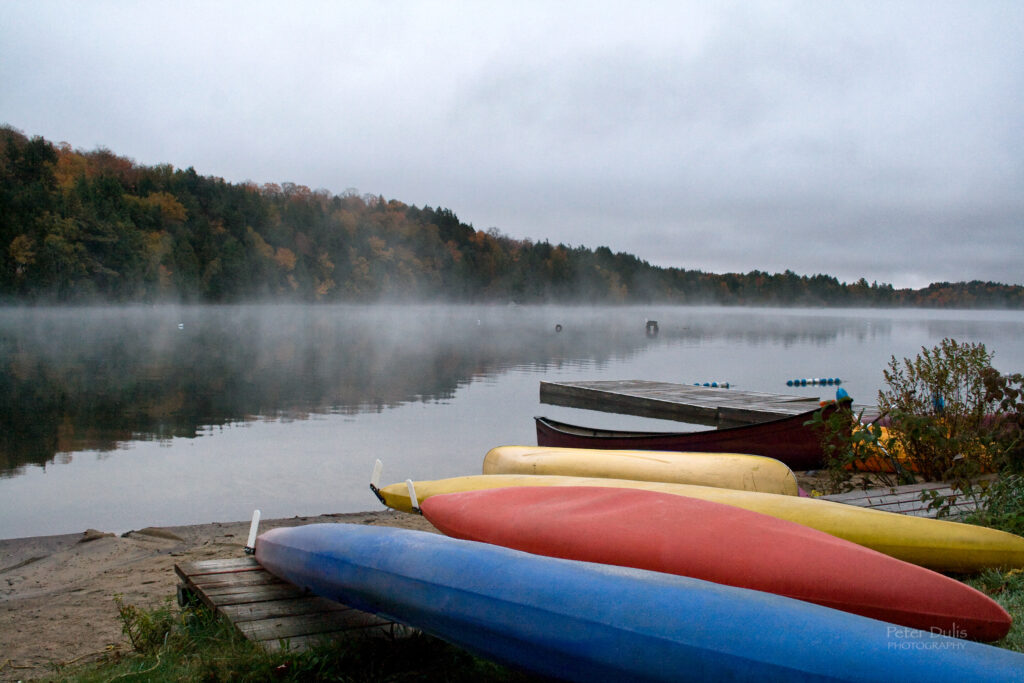
18-200 mm Lens; AV mode; f/7.1, ISO 400; 1/20sec.
Algonquin Provincial Park
A true Canadian icon, Algonquin Provincial Park is Ontario’s oldest provincial park and one of the best places in the country to experience raw wilderness. Spanning over 7,600 square kilometres, it’s a landscape of forests, lakes, and rivers that feels both vast and deeply peaceful. Algonquin is world-renowned for its interconnected network of lakes and rivers. Having completed many canoe portages here over the years, I captured this image in the early morning as mist gently lifted off the water.
24-105mm lens; manual mode; f/14, ISO 100; 2.5 sec.; 10-stop neutral density filter with camera on tripod.
Niagara Falls
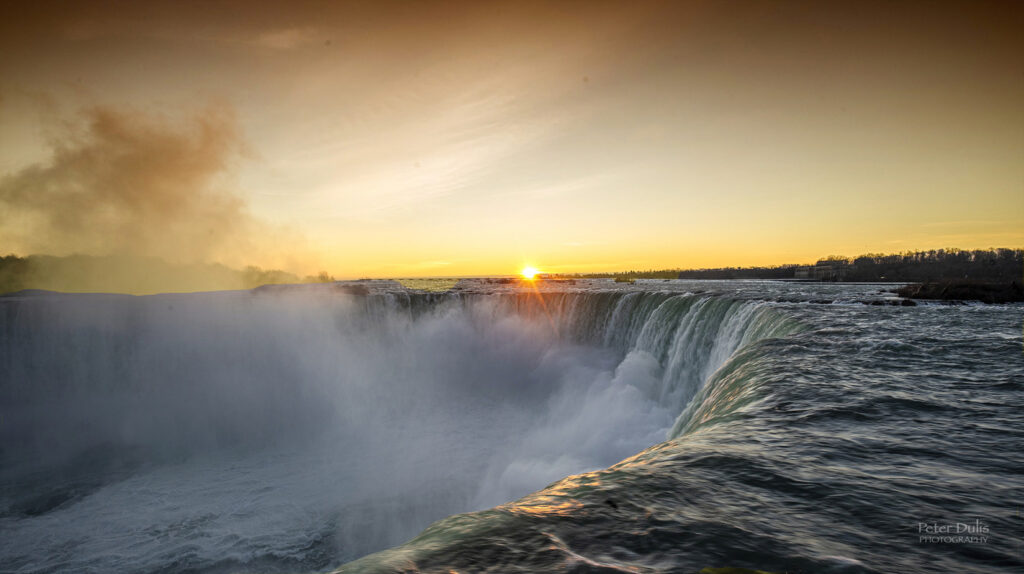
One of the most powerful and photographed natural wonders in the world, Niagara Falls is actually made up of three waterfalls: the massive Horseshoe Falls (on the Canadian side), American Falls, and Bridal Veil Falls. The sheer volume of water thundering over the edge creates constant mist, rainbows, and a dynamic scene that changes by the minute. Must-shoot locations include the Table Rock Welcome Centre, where I captured this close-up view of the falls right at the edge. I’m planning to run a photography workshop here in May—if you’re interested in joining, let me know!
iPhone 13; 1/2800 sec; f/1.6; ISO 50
Prince Edward County
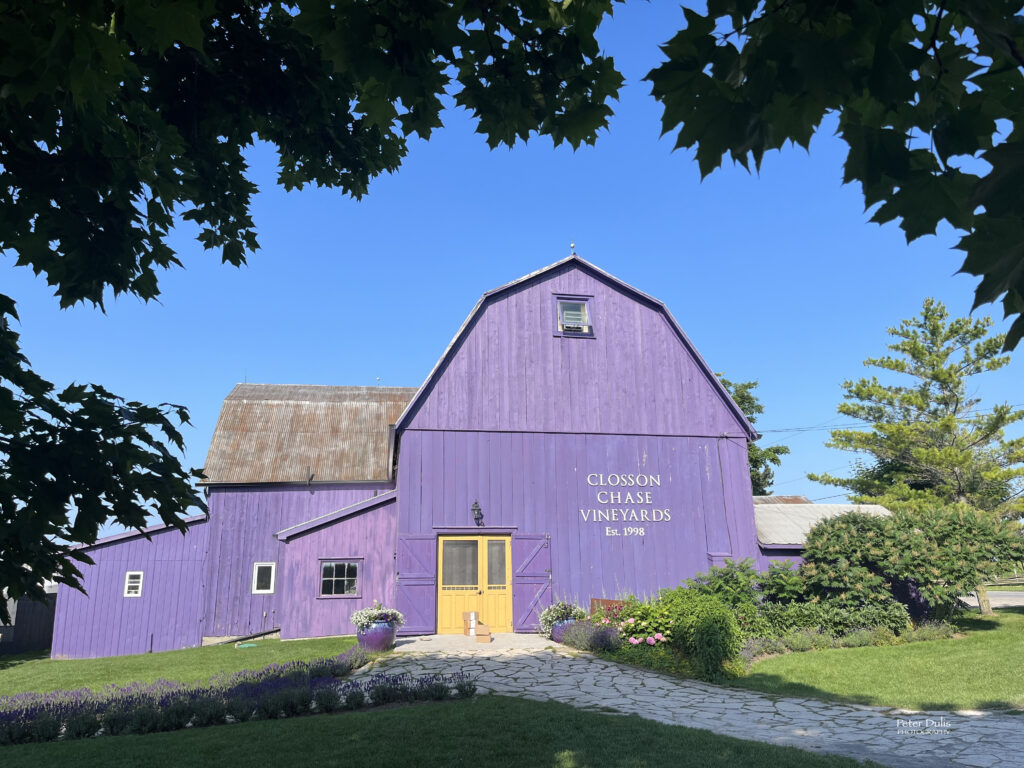
Here is a hidden beauty! A blend of sandy beaches, wineries, and rural charm. Sandbanks Provincial Park is a highlight. Often called “The County,” this laid-back peninsula on the north shore of Lake Ontario has quietly become one of Ontario’s best photo destinations. It blends rural charm, sandy beaches, vineyards, and historic architecture—giving you a wide range of subjects within a compact area. We were doing a tourism video for the township and Clossen Vineyards was one of our clients.
16-35mm Lens; AV mode; f/11’ ISO 320, 1/40sec.
Cheltenham Badlands
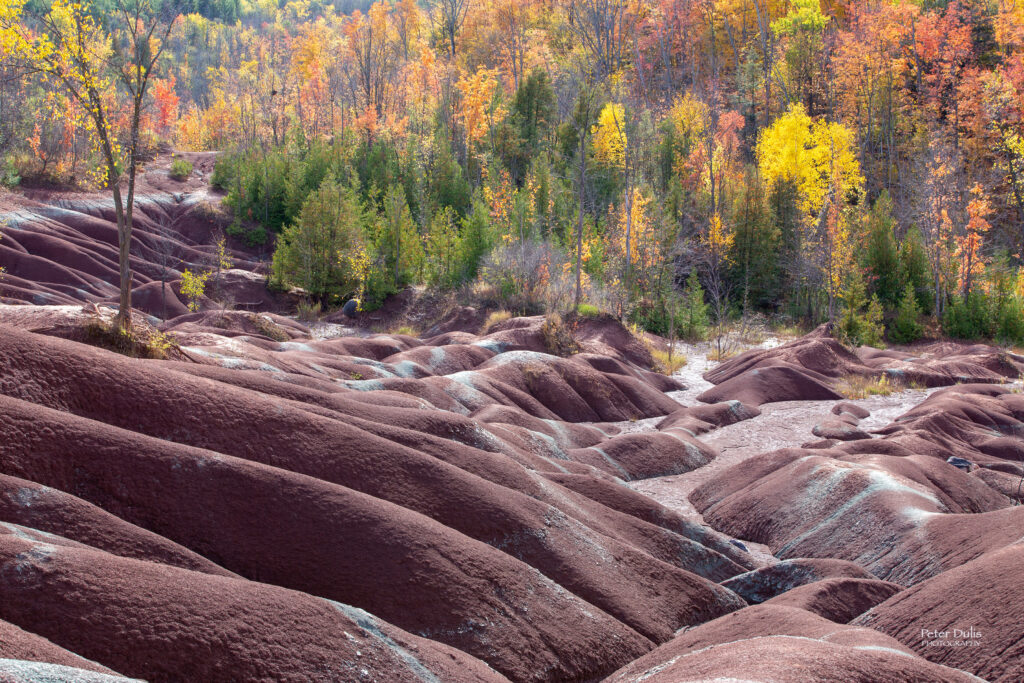
The Badlands are a series of rolling red hills and deep gullies formed from exposed Queenston shale, a soft sedimentary rock. Their distinctive red colour comes from iron oxide, while streaks of green reveal chemical changes from groundwater. Today, the site is carefully protected and visitors must stay on boardwalks and designated viewing areas which is actually great for photographers not wishing to have people all over the hills. Here’s a sunrise photo taken in fall from the viewing platform.
Powershop D30; 1/200 sec; f/4.5; ISO 200
Manitoulin Island
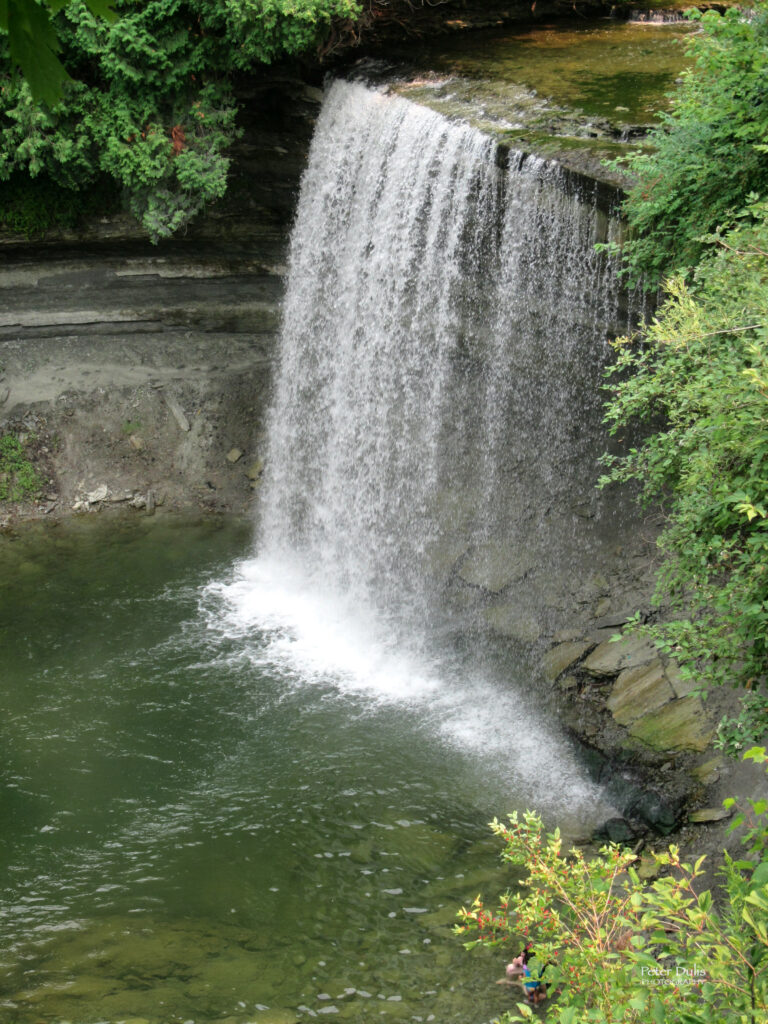
The largest freshwater island in the world, Manitoulin sits where Lake Huron meets Georgian Bay. It has a slower, more spiritual feel than many Ontario destinations—shaped by its strong Indigenous heritage, wide-open landscapes, and quiet pace. For photographers, it offers a blend of rugged shoreline, pastoral farmland, and cultural depth that’s hard to find elsewhere. Must-Shoot Locations are like the one I captured here at Bridal Veil Falls. But other must shoot locations are: Cup and Saucer Trail, Providence Bay Beach and South Baymouth where the ferry comes in.
24-105mm Lens; 1/30 sec.; f/13; ISO 500; AV mode
Elora Gorge
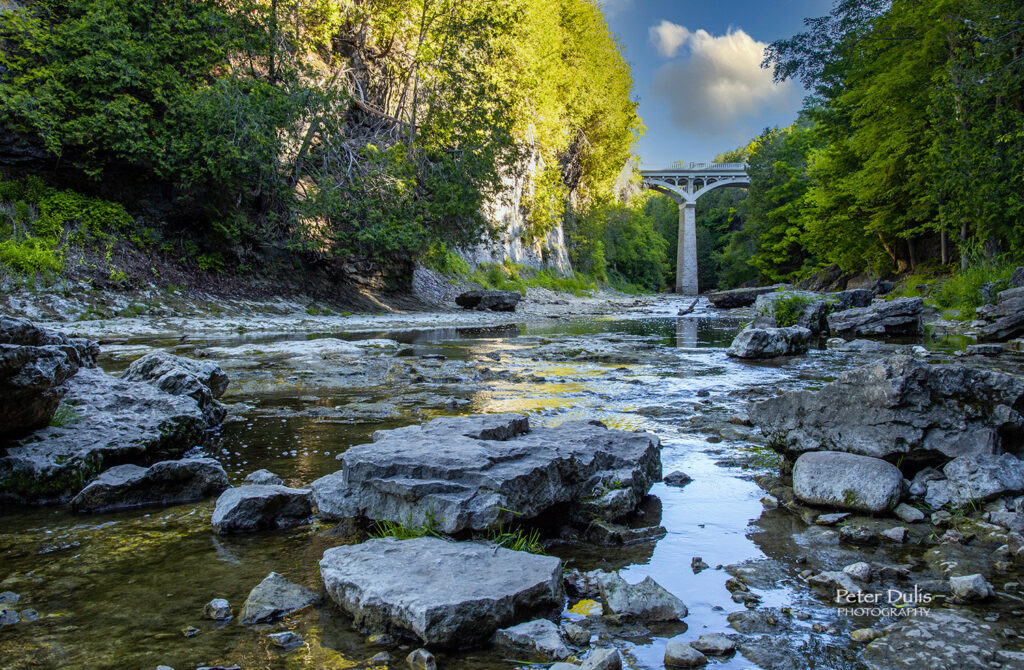
Just about 90 minutes from the GTA, Elora Gorge is one of Ontario’s most photogenic natural spots—where the Grand River cuts a dramatic limestone canyon up to 22 metres deep. Towering cliffs, fast-moving water, and a charming village nearby make it a compact but highly rewarding photo destination. We hiked down the steps to get to the bottom of the gorge to capture this photo.
Final Thought
Ontario’s beauty lies in its diversity—quiet moments in nature, powerful landscapes, and hidden gems waiting to be discovered. Whether you are seeking inspiration for photography or simply a place to reflect, each of these destinations offers something meaningful.
The Finishing Touch
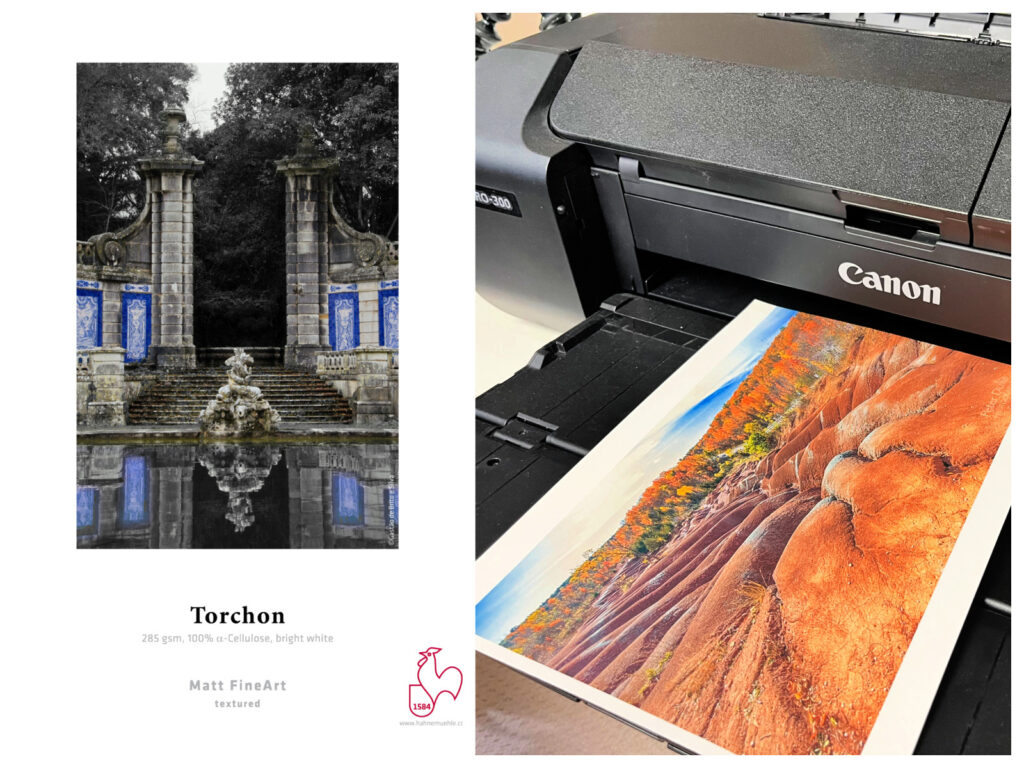
For this “Ontario” collection, I decided to use the Hahnemühle Torchon paper. The Hahnemühle Torchon is a cellulose-based FineArt inkjet paper with an inkjet coating specially tailored for FineArt applications. I love the bright white surface that’s coarsely structured and has a very special feel to it. The unique surface structure blends with the images and lends them an impressive three-dimensional effect and sense of depth, which was perfect for this photo collection. You have to give it a try!
Peter Dulis